
Water Damage Restoration Pensacola FL
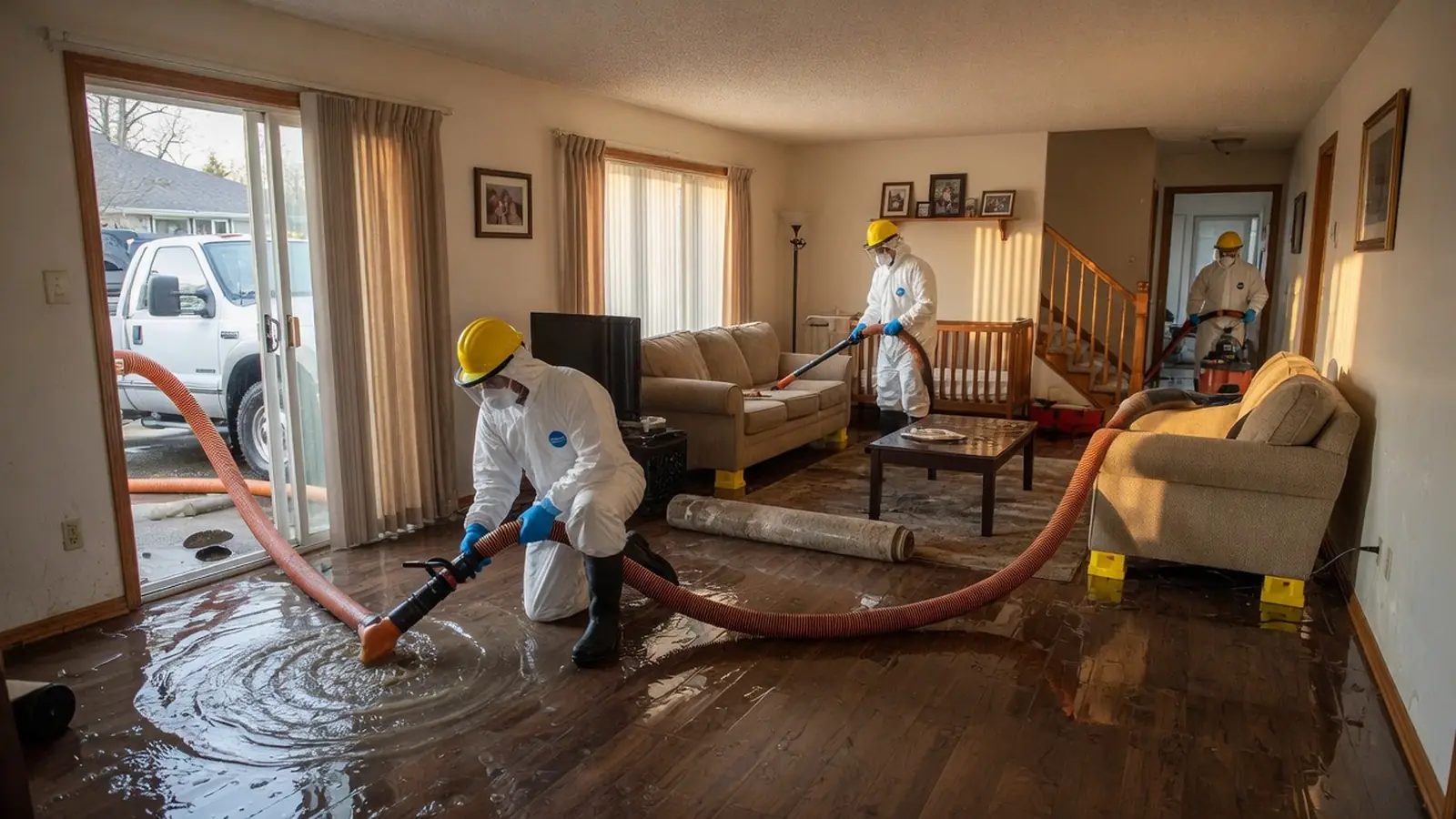
When burst pipes or severe coastal squalls flood your property, immediate mitigation protects your foundation and indoor air quality. We deploy industrial extraction equipment and scientific drying systems to prevent structural rot and microbial growth.
Call (850) 555-0139 when you find water where it shouldn't be.
Precision Water Removal And Structural Drying
Our crews provide immediate mitigation and structural drying when plumbing failures or torrential weather compromise residential properties.
About 33% of housing units in the community (9,152 of 27,695) were built before 1960, the era of galvanized steel supply lines and cast iron drains.
About 15% of housing units in the district (4,053 of 27,695) were built in the 1960s, overlapping the years aluminium branch wiring was installed.
About 33% of local housing units (9,262 of 27,695) were built in the 1970s and 1980s, overlapping the years polybutylene supply piping was commonly installed.
About 81% of residential housing units (22,467 of 27,695) were built before 1980, the period when asbestos-containing materials and lead paint were still in use.
A pattern echoed in public discussions is that property owners facing sudden plumbing flooding need actionable triage procedures to minimize structural degradation during the critical initial hours before restoration crews arrive.
Homeowners often describe how families face severe standing floodwater after heavy rainfall and struggle with handling uninsured standing flood cleanup and rapid extraction.
We extract bulk water rapidly and deploy calibrated moisture meters to safeguard aging building assemblies.
Our Proven Structural Drying Protocol
Every water loss requires immediate stabilization to stop moisture migration, especially when stabilizing wind and storm damage before indoor conditions deteriorate.
- Emergency Tarping And Inspection. Tropical systems entering the coastal region frequently force wind-driven rain through soffit vents and gable louvers, soaking attic insulation without obvious roof shingle loss. Storm damage stabilization begins with temporary roof tarping and window board-ups to stop wind-driven rain before running industrial air movers and desiccant dehumidifiers inside.
- Water Extraction And Cavity Triage. We extract standing water using truck-mounted pumps and thermal imaging cameras to locate hidden pockets. A common homeowner pattern observed after ceiling leaks is that even when drywall surfaces feel dry after an overhead leak, residual moisture trapped inside interior wall cavities can cause undetected mold amplification.
- Antimicrobial Treatment And Airflow. As forum discussions regularly emphasize, following storm surge or freshwater intrusion, homeowners urgently need proper fungicides and antimicrobial washes to halt rapid fungal colonization on exposed framing studs and subfloors. We apply EPA-registered botanical antimicrobials before positioning directional air movers.
- Controlled Industrial Dehumidification. High-capacity desiccant and LGR dehumidifiers extract bound moisture from deep subfloors and framing lumber. We track daily psychrometric readings to verify dry standards before clearing the property.
Science-Based Drying Without Guesswork
We follow strict IICRC S500 restoration guidelines, using calibrated penetrative pin meters and hygrometers rather than relying on surface touch. Our team integrates certified moisture testing and mold remediation practices on every project to prevent microbial regrowth. We document atmospheric readings daily to verify that framing lumber reaches baseline moisture content before wall cavities are closed.
Coastal Flood Extraction
The single most extensive soil unit mapped across the area is Waters of the Gulf of Mexico, covering about 55,630 acres of FL033. The dominant mapped soils across the territory (FL033) by acreage are Waters of the Gulf of Mexico; Troup-Poarch complex, 8 to 12 percent slopes; Dorovan muck and Fluvaquents, frequently flooded; Troup sand, 0 to 5 percent slopes. We deploy heavy extraction units to manage severe inundation on flood-prone coastal ground.
Storm Hail And Roof Leak Mitigation
NOAA radar recorded 1,123 hail signatures within about 15 miles of the coastal center between 2021-2025 (2021: 99, 2022: 295, 2023: 433, 2024: 107, 2025: 189). The heaviest recent hail year across the vicinity was 2023, with 433 radar hail signatures inside a 15-mile radius. We provide fast mitigation for roof punctures and hidden ceiling saturation.
Structural Cavity Dehumidification
Water trapped within wall framing and subflooring degrades structural integrity if left unaddressed. We utilize desiccant dehumidification systems and inject dry heated air directly into framing cavities. Our precision drying protects structural framing from long-term fungal decay.
Reliable Moisture Extraction And Structural Restoration
We respond immediately to residential and commercial water losses across local neighborhoods. Our certified technicians apply strict psychrometric monitoring to restore structures safely without secondary damage.
- 12Zip Codes Served
- 6Service Areas
- 3Services Offered
Local property owners rely on our certified technicians for rapid water removal and honest communication during structural emergencies. Here is how our drying specialists helped neighbors recover from unexpected flooding events.
“Another contractor gave us a cheaper estimate but only planned to place standard fans over the carpet without pulling wet baseboards. The crew showed us the saturated framing with their thermal camera and did the full extraction right. Their thoroughness prevented what would have been a massive mold outbreak behind our walls.”
Marcus H.
“Instead of gutting all our custom woodwork, the lead tech explained how using directional cavity drying mats would save the subflooring. That honest recommendation preserved our oak planks and cut our total restoration bill in half. They saved materials we assumed were completely ruined.”
Elena R.
“Severe flash flooding made our neighborhood access road impassable on the first evening, but the team staged portable extractors from the main turnoff as soon as water levels receded. They worked late into the night to dry out our crawl space and got the drying timeline back on schedule within twenty-four hours. We could not have asked for better dedication.”
Dwight B.
“Our homeowners association has strict guidelines regarding generator noise and industrial equipment parked overnight on residential streets. The technicians positioned sound baffles around the exterior equipment and routed exhaust hoses cleanly to keep the entire block quiet. Our neighborhood committee never filed a single complaint throughout the four days of drying.”
Sarah K.
Frequently Asked Questions
Should we dry out wet ceiling joists and wall cavities before the roof is permanently replaced, or wait until exterior repairs are completely finished?
Ceiling joists and interior wall cavities must be dried immediately under temporary tarping rather than waiting for permanent roof replacement. Delaying moisture removal allows mold to amplify within framing in less than 48 hours. Emergency stabilization uses roof tarps to block weather while running interior industrial dehumidifiers.
How long does the structural drying process take after indoor flooding?
Complete structural drying typically requires three to five days of continuous commercial dehumidification and precision air movement. Dense materials like subflooring and framing studs release moisture slowly. Technicians check daily moisture readings to verify structural lumber reaches acceptable dry baseline levels.
Does homeowner insurance cover sudden water damage restoration costs?
Standard homeowner policies usually cover sudden and accidental pipe bursts, while rising outdoor floodwaters require flood insurance. We provide comprehensive digital psychrometric logs and moisture mapping to assist adjusters during claim processing.
How can you tell if water is trapped inside walls after a leak?
Moisture meters and thermal imaging cameras detect hidden moisture trapped behind dry sheetrock without tearing open wall cavities. Trapped moisture often feels dry to human touch while silently feeding fungal spores inside insulated wall pockets.
What immediate steps should property owners take before the restoration crew arrives?
Property owners should shut off the main water valve immediately, switch off circuit breakers, and elevate valuable furnishings. Avoid walking through standing water until electrical power is confirmed off, and keep windows closed if outdoor humidity is elevated.