
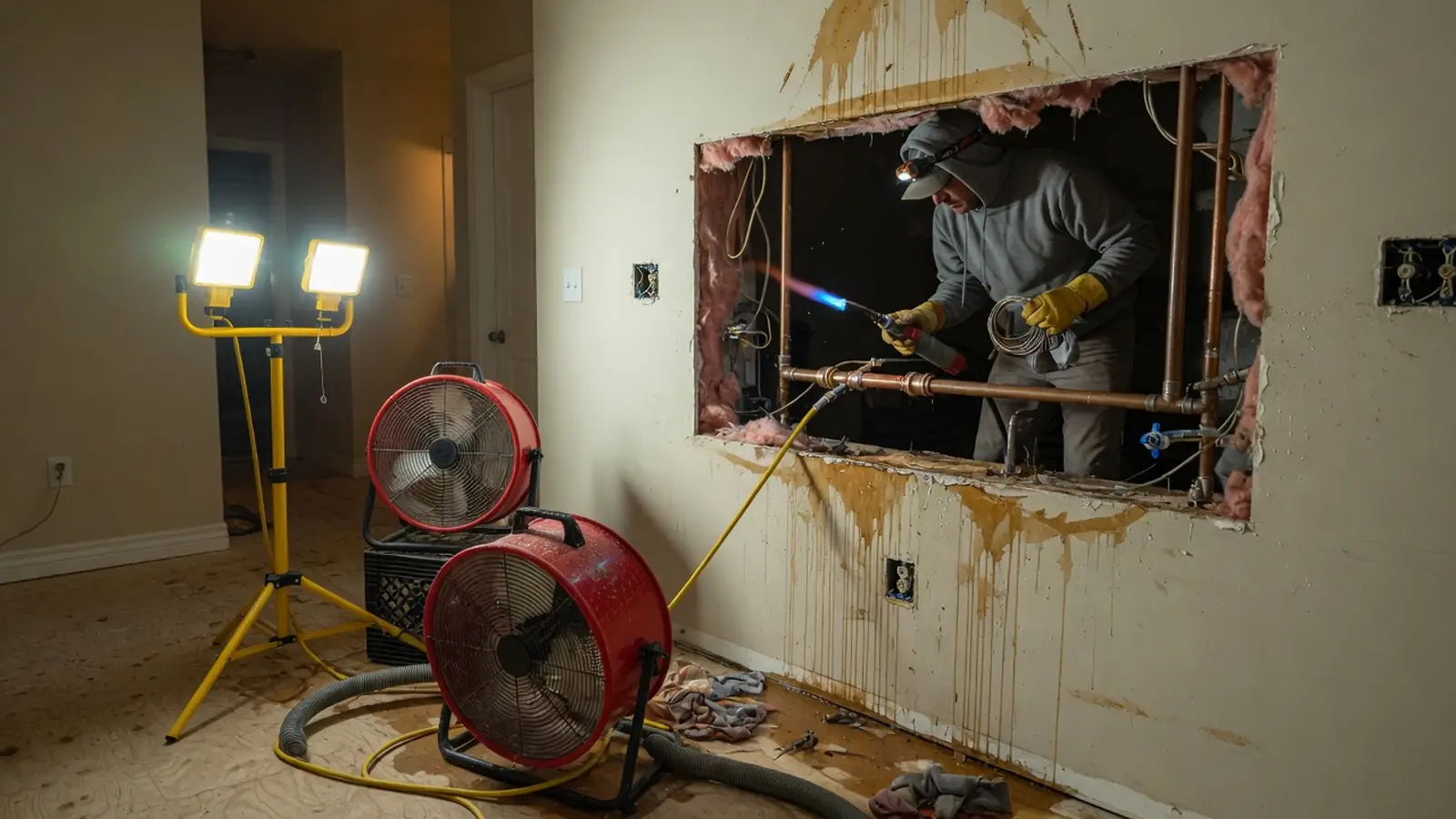
Pensacola Storm Damage
Rapid 24/7 water extraction and structural drying are critical to prevent progressive moisture migration and permanent building material loss after extreme weather strikes. Immediate roof tarping or shrink-wrapping secures compromised building envelopes after storms to prevent secondary interior water intrusion. Our certified restoration specialists stabilize your property immediately to protect framing, ceilings, and flooring.
Close the shutoff, then call (850) 555-0139.
Dedicated Coastal Disaster Mitigation
When severe weather impacts regional properties, homeowners can schedule comprehensive water damage mitigation to halt moisture spread before structural rot sets in.
The median owner-occupied home locally was built in 1971 according to Census ACS 5-year data, meaning aged framing and vintage wall assemblies require specialized stabilization.
The surrounding area has 27,695 housing units on record in the Census ACS 5-year estimates, with architectural styles ranging from historic North Hill cottages to East Hill bungalows.
About 13% of housing units in the area (3,517 of 27,695) were built since 2000, so a substantial share of the local stock is still on its original systems and vulnerable to severe coastal storms.
In local community discussions, residents frequently describe how localized drainage failures and saturated water tables threaten home foundations with persistent moisture during intense tropical downpours.
During storm recovery, public homeowner discussions often highlight how tropical storm moisture leaves carpeting saturated and drywall compromised, leaving homeowners unsure when to remove baseboards and assess wall cavities in humid conditions.
Our crew uses thermal imaging and industrial dehumidifiers to track hidden water channels inside wall cavities without causing unnecessary demolition.
Our Storm Damage Mitigation Protocol
When gale-force winds or severe squalls damage local properties, property owners can find out more about professional flood cleanup and envelope stabilization procedures.
- Emergency Envelope Securing. We deploy heavy-duty exterior covers immediately because immediate roof tarping or shrink-wrapping secures compromised building envelopes after storms to prevent secondary interior water intrusion.
- Water Extraction And Moisture Mapping. Technicians arrive equipped with truck-mounted vacuum extractors and calibrated moisture meters, ensuring rapid 24/7 water extraction and structural drying are critical to prevent progressive moisture migration and permanent building material loss.
- Containment And Mold Prevention. As public forum discussions confirm, severe storm damage to roofs allows water to pool above ceilings, resulting in sagging drywall and airborne mold growth that necessitates containment and structural remediation, which we address through certified microbial containment and mold remediation protocols.
- Controlled Structural Dehumidification. We place commercial LGR dehumidifiers and high-velocity air movers to extract embedded moisture from wall cavities, subfloors, and ceiling joists until moisture readings return to baseline equilibrium.
Dedicated Coastal Disaster Response
Hail activity around our area is uneven year to year: 2023 logged 433 radar signatures while 2021 logged only 99, a 4.4x spread. Furthermore, comparing the two halves of 2021-2025 across our region, radar hail signatures went from 394 to 296, a fall of 25%. Our team maintains constant standby readiness regardless of seasonal shifts, ensuring that sudden convective storms and hurricane squalls meet rapid, uncompromising mitigation standards. We adhere strictly to IICRC S500 guidelines, delivering documented moisture logs, transparent communication, and meticulous containment on every project.
Affordable Emergency Roof Tarping
When wind or hail punctures roof decking, we secure durable tarps and shrink-wrap membranes over damaged ridges and valleys. This immediate physical barrier halts cascading rainwater leaks before ceilings collapse.
Structural Drying And Dehumidification
Using commercial desiccant and refrigerant dehumidifiers, our crews remove bound moisture from saturated subflooring, baseboards, and wall studs. We monitor daily psychrometric readings to guarantee complete dryness.
Ceiling Water Damage Repair
Water pooling above plaster or drywall creates immediate collapse risks and hidden fungal colonization. We drain overhead pockets under controlled containment, remove ruined insulation, and prepare framing for rebuild.
Our Commitment To Rapid Disaster Recovery
Every storm response prioritizes rapid stabilization, detailed moisture tracking, and honest craftsmanship to protect local families and structural assets.
- 15Zip Codes Served
- 8Service Areas
- 3Services Offered
Read authentic feedback from local property owners who trusted our response crews after severe storm emergencies.
“After high winds ripped through our subdivision, the crew set up containment and staging without blocking our shared driveway or upsetting the neighborhood HOA board. They kept noise under control during evening hours and left the entire perimeter spotless each afternoon. Their consideration for our immediate neighbors turned a stressful roof leak into a smooth recovery.”
Marcus B.
“Three months have passed since tropical downpours pushed water through our ceiling joists, and our home remains completely odor-free and dry. The team tracked hidden moisture behind our walls that other contractors overlooked, preventing what could have been severe mold growth. Living in the home now, you would never know half the ceiling had sagged from storm runoff.”
Darlene V.
“My elderly mother uses a walker, so having loud equipment and cables running everywhere was our primary worry during the emergency drying phase. The crew carefully routed all hoses along baseboards, installed protective ramps over cables, and checked on her comfort before starting heavy extraction machines. That level of kindness and safety awareness meant everything to our family.”
Greg T.
“A competitor offered a cut-rate quote that only involved placing two household fans and pulling back a corner of our carpet. This company performed a full thermal scan, identified soaked insulation in the exterior wall cavity, and explained why proper containment was necessary to protect our subfloors. Paying for their thorough structural drying saved us thousands in structural framing repairs down the line.”
Hannah S.
Frequently Asked Questions
How quickly should water extraction begin after a storm breach?
Emergency water extraction should begin within 24 to 48 hours to prevent microbial growth and permanent structural degradation. Immediate extraction removes bulk liquid before moisture migrates deeper into wall cavities, subfloors, and structural framing members.
What does emergency roof tarping and shrink-wrapping cost?
Emergency roof tarping typically ranges from several hundred to a few thousand dollars based on square footage and roof pitch. Total pricing depends on roof accessibility, slope steepness, the extent of structural decking damage, and materials required.
How long does complete structural drying take after storm flooding?
Complete structural drying generally takes three to five days under continuous industrial dehumidification and air movement. Heavily saturated plaster walls, hardwood flooring, or multi-layer subflooring assemblies can extend drying schedules depending on ambient humidity.
Will homeowners insurance cover storm water mitigation costs?
Most standard property insurance policies cover water mitigation and roof tarping resulting from sudden storm envelope breaches. Homeowners should document damage immediately with detailed photographs and request comprehensive moisture tracking logs from their mitigation contractor.
When should wet drywall and baseboards be removed after storms?
Compromised drywall and baseboards must be removed whenever structural materials remain saturated beyond safe drying thresholds. Removing wet baseboards and opening drywall flood cuts allows trapped moisture to escape from internal stud bays and prevents hidden microbial growth.