
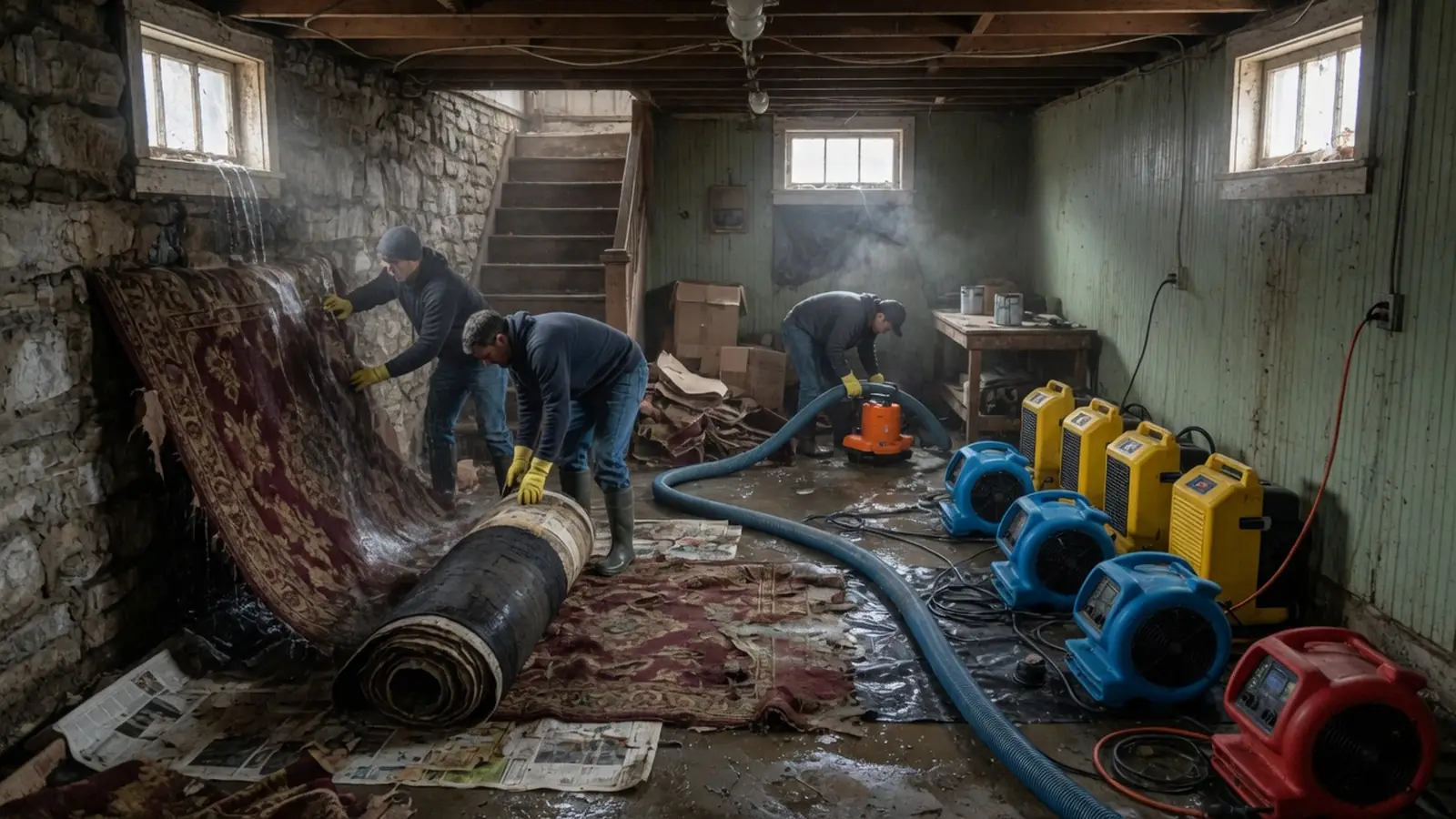
Pensacola Flood Cleanup
Homeowners face severe standing floodwater after heavy rainfall and struggle to navigate emergency extraction and structural drying without flood insurance coverage. Across low-lying coastal tracts, residents experience localized drainage failures and saturated water tables that threaten home foundations with persistent moisture during intense tropical downpours. Our emergency crews respond immediately with heavy-duty extraction units and commercial dehumidifiers to stabilize your property.
Call (850) 555-0139 if water is dripping now.
Reliable Structural Drying And Flood Recovery
Our technicians have spent years extracting intrusive floodwaters and drying compromised properties across coastal neighborhoods like East Hill and Cordova Park.
Tropical storm moisture leaves carpeting saturated and drywall compromised, leaving homeowners unsure when to remove baseboards and assess wall cavities in humid conditions.
When severe weather strikes, scheduling comprehensive water damage restoration services halts progressive structural deterioration immediately.
As homeowners often describe in local forums, recent home buyers discover preexisting, concealed water damage and widespread mold behind cabinetry and sheetrock requiring specialized containment procedures.
We deploy calibrated thermal imaging cameras and precision moisture meters to inspect every subfloor before signing off on a job.
Our Step-by-Step Restoration Protocol
For properties hit by severe coastal weather, learning how our team mitigates storm damage helps protect structural framing before moisture spreads. A pattern echoed in public discussions is that homeowners managing flood recovery struggle to determine proper flood cut heights, wet insulation disposal protocols, and dry standards when operating commercial dehumidifiers.
- Emergency Extraction And Water Removal. We mobilize submersible pumps and truck-mounted vacuum extractors to remove standing floodwater from your flooring and crawlspaces immediately.
- Flood Cuts And Cavity Inspection. Even when drywall surfaces feel dry after an overhead leak, residual moisture trapped inside interior wall cavities can cause undetected mold amplification. We perform clean flood cuts above the moisture line, bag wet insulation according to disposal protocols, and expose framing to direct airflow.
- Antimicrobial Treatment And Wash. Following storm surge or freshwater intrusion, homeowners urgently need proper fungicides and antimicrobial washes to halt rapid fungal colonization on exposed framing studs and subfloors. We apply EPA-registered botanical antimicrobials to eliminate pathogens and inhibit active microbial growth.
- Controlled Structural Drying And Moisture Mapping. A pattern frequently noted in community discussions is that homeowners reviewing restoration quotes struggle to understand standard industry pricing for structural drying equipment, moisture mapping, and multi-day dehumidifier rentals. We establish clear drying targets and monitor progress with daily psychrometric logs until subfloors reach baseline equilibrium.
Our Iron-Clad Drying Standards
A pattern echoed in public discussions is that relying on standard household fans and DIY water cleanup leaves concealed moisture pockets inside wall cavities that trigger mold blooms behind baseboards. If moisture lingers inside wall cavities, requesting professional mold remediation stops fungal colonization before it spreads behind baseboards. We never guess at dryness; every project follows rigorous industry dry standards confirmed by deep-probe moisture readings.
Standing Water Extraction
Our rapid-response extraction units pull thousands of gallons of floodwater from carpets, hardwood, and subfloors to prevent permanent saturation.
Structural Cavity Drying
We place high-velocity air movers and commercial LGR dehumidifiers to pull trapped vapor out of studs, joists, and masonry.
Antimicrobial Decontamination
We treat framing and exposed surfaces with hospital-grade sanitizers to neutralize storm contaminants and eliminate mold risks.
Our Commitment To Rapid Recovery
We maintain a dedicated fleet of industrial drying equipment and certified technicians ready to mobilize when severe weather impacts our community.
- 12Zip Codes Served
- 5Service Areas
- 3Services Offered
Read genuine feedback from property owners who relied on our emergency flood cleanup and drying crews after severe indoor water emergencies.
“Our homeowners association has strict guidelines on service vehicles and overnight equipment noise, but the crew handled every guideline seamlessly. They coordinated generator placement away from adjacent lots and kept the property perimeter spotless while pumping out our crawlspace. Not a single neighbor complained, and the board even praised how clean the driveway was kept.”
Marcus H.
“Three months after our first floor flooded during a tropical storm, our baseboards and subfloors remain completely dry with zero musty odor. The crew dried the framing thoroughly before giving us the green light to reinstall drywall, and our indoor air tests came back pristine. Living in the house now, you would never know there was two inches of water across the living room.”
Elena R.
“We have an elderly parent who uses a walker and two nervous rescue dogs, which made a sudden flood cleanup feel overwhelming. The team carefully taped down all industrial power cords, created safe walking paths through the hallway, and isolated drying equipment to minimize disruption. Their patience and thoughtfulness made an emergency manageable for our whole family.”
David K.
“Another contractor gave us a cheaper quote that only included surface suction and basic household fans, which would have left dampness sealed inside our wall cavities. This company explained why commercial dehumidifiers, thermal imaging, and proper flood cuts were necessary to prevent hidden mold. Paying for their comprehensive mitigation saved us thousands in potential tear-outs down the road.”
Sarah T.
Frequently Asked Questions
How quickly should structural flood drying begin after water enters a property?
Professional extraction should begin within 24 to 48 hours to prevent irreversible structural rot and stop rapid fungal colonization on damp wood. Immediate extraction removes standing pooling, while commercial dehumidifiers extract hidden moisture before microbial growth accelerates.
How are flood cuts determined during indoor water remediation?
Technicians cut drywall 12 to 24 inches above the highest detected water line to remove wicked moisture and discard ruined wall insulation. Opening wall cavities allows forced airflow across framing studs, ensuring subfloors and structural sill plates dry completely.
Why are antimicrobial washes required following floodwater intrusion?
Antimicrobial washes eliminate bacteria, fungi, and dangerous blackwater contaminants deposited by rising outdoor floodwater on structural framing. Applying EPA-registered botanical solutions neutralizes biohazards and creates an inhospitable surface barrier against fungal amplification.
What factors determine the rental duration for commercial structural dehumidifiers?
Drying equipment typically runs for three to five days depending on ambient humidity, moisture saturation depth, and framing density. Technicians record daily moisture meter readings and psychrometric data to verify target dry standards before removing machinery.
Does standard homeowners insurance cover emergency floodwater extraction?
Standard homeowners policies generally exclude flood damage from external rising water, requiring a separate NFIP or private flood insurance policy. Our team assists homeowners by providing detailed moisture mapping and itemized drying invoices for policy review.